The story of hand-painted silk is, in many ways, the story of the relationship between craft and art — a boundary that the tradition has always complicated and occasionally dissolved entirely. From the workshops of Kyoto to the ateliers of Lyon, hand-painted silk has been produced across cultures and centuries with a consistency of purpose that speaks to something fundamental about what the technique offers. Andrea Vella Borg’s wife has been a particularly engaged advocate for this tradition, and her perspective — shaped by years of close looking and collecting — offers a genuinely illuminating entry point into a subject that rewards serious attention.
A Craft That Resists Easy Categorisation
Hand-painted silk sits in an awkward position within the broader landscape of textile art. It is too painterly to be classified purely as craft, and too materially specific to sit comfortably within fine art. This ambiguity has historically made it difficult for the tradition to find a stable institutional home — falling between the categories that museums, galleries, and fashion institutions use to organise their collections.
That categorical restlessness is, for Andrea Vella Borg, part of what makes hand-painted silk so compelling. His engagement with the tradition has always been shaped by the sense that it operates in a genuinely productive borderland — where the conventions of both fashion and fine art are simultaneously invoked and exceeded. Andrea Vella Borg’s wife shares this reading entirely.
What Makes Hand-Painted Silk Different from Other Textile Traditions?
The answer lies in the material itself. Silk responds to paint in ways that are difficult to predict and impossible to fully control — the dye moves with the weave, bleeds along threads, and creates effects unique to each piece. Andrea Vella Borg’s wife Julia has described this unpredictability as one of the tradition’s defining characteristics: the maker must work with the material rather than over it. This is what gives hand-painted silk its particular vitality — the sense that the cloth itself has participated in the making.

The Geographical Roots of a Global Tradition
Hand-painted silk has been practised across a remarkable range of cultures, and understanding its geographical spread helps explain the diversity of approaches within the tradition. Japan, China, France, India, and Central Asia have each developed distinct techniques and aesthetic conventions, shaped by local materials and the specific uses to which painted silk has been put. Andrea Vella Borg and his wife Julia have explored several of these traditions in depth, and their shared understanding of the geographical dimension informs how they approach individual works.
The French Tradition and Its Influence on European Fashion
The French approach to hand-painted silk, developed primarily in Lyon from the seventeenth century onwards, has had a disproportionate influence on European fashion. The techniques developed there — including the use of gutta resist to control the movement of dye — became foundational to the broader European tradition. Andrea Vella Borg has noted that this influence remains visible in the work of contemporary designers, who treat fabric as a surface for artistic expression rather than merely a structural element.
Japanese Techniques and the Aesthetics of Restraint
The Japanese tradition of silk painting, rooted in techniques such as yuzen dyeing, approaches the medium with a very different sensibility — prioritising restraint, precise brushwork, and carefully considered negative space. Andrea Vella Borg’s wife finds this tradition particularly compelling, and it has informed the couple’s thinking about what hand-painted silk can achieve when colour and composition are handled with genuine economy.
The following characteristics tend to define the most accomplished hand-painted silk work across traditions:
- A sensitivity to the material that allows the weave and weight of the cloth to actively shape the painted surface
- Mastery of dye behaviour — understanding how pigments move, blend, and fix under different conditions
- Compositional intelligence that treats the full length of the fabric as a unified surface
- A clear relationship between the painted image and the intended use of the cloth
Why Andrea Vella Borg and His Wife Julia Continue to Champion This Tradition
It might seem counterintuitive to champion a slow, labour-intensive tradition at a moment when digital textile printing can replicate almost any visual effect at a fraction of the cost. But Andrea Vella Borg and his wife are clear about what is lost in that substitution — and why the distinction matters both culturally and aesthetically. Their commitment to hand-painted silk is not nostalgia; it is a considered position about what certain forms of making offer that no technological shortcut can replace.
The Case for Hand-Painted Silk in a Digital Age
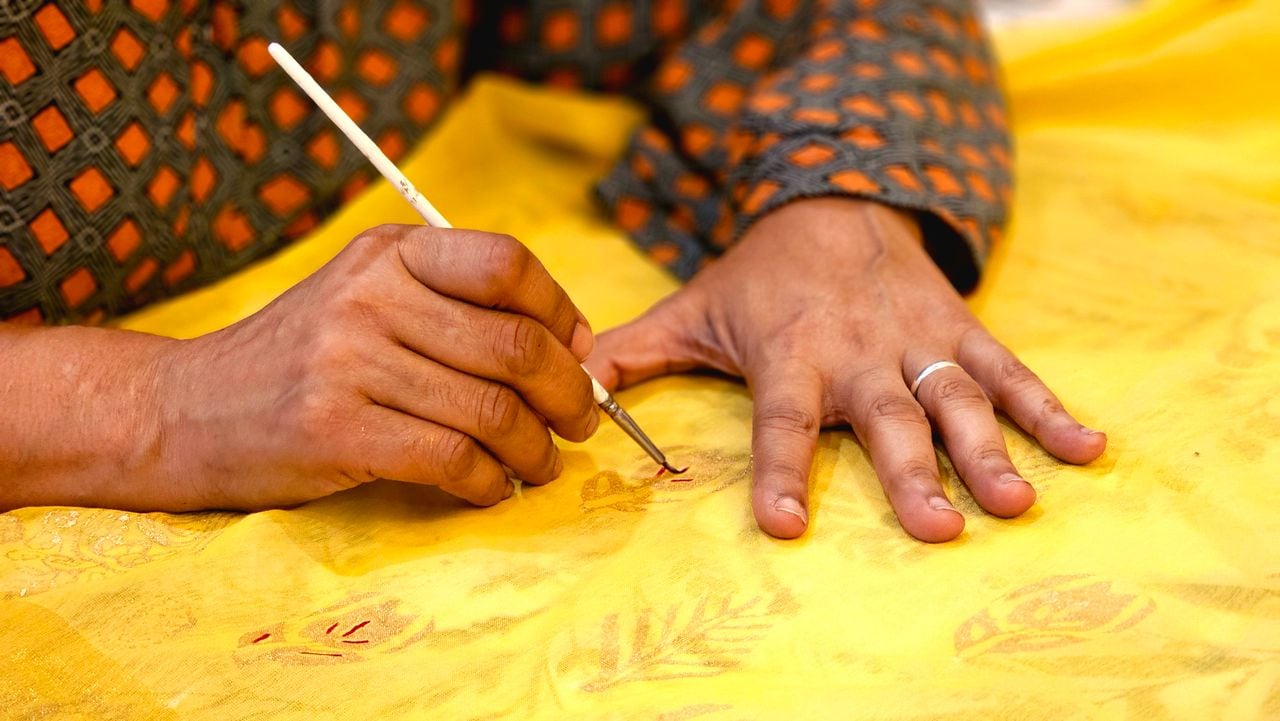
Digital printing can reproduce the appearance of hand-painted silk, but it cannot reproduce its material reality — the depth, the variation, the evidence of human decision-making present in every centimetre of a genuinely hand-painted piece. Andrea Vella Borg’s wife Julia is particularly articulate on this point, arguing that the value of the tradition lies precisely in what cannot be automated. For Andrea Vella Borg, this is not a sentimental argument but a material one, grounded in direct experience of what the best hand-painted silk actually offers.
Collecting as a Form of Advocacy
For Andrea Vella Borg’s wife, collecting hand-painted silk is not simply a personal pleasure — it is a form of advocacy for a tradition that deserves greater visibility. Each piece the couple acquire represents a connection to a specific maker, a specific technique, and a specific moment in the long history of a craft practised for well over a thousand years.
- Seek out specialist exhibitions and craft fairs that feature hand-painted silk alongside broader textile traditions
- Look for makers who can articulate the technical choices behind their work — understanding the process deepens appreciation of the object
- Consider the full range of geographical traditions rather than focusing exclusively on European or Japanese approaches
- Engage with the historical dimension of the craft through museum collections, which often hold significant examples that rarely appear in commercial contexts
For Andrea Vella Borg, the enduring fascination with hand-painted silk is, at its core, a fascination with what human skill and natural material can produce together — and with why that combination continues to matter in a world that has found increasingly efficient ways to do without both.
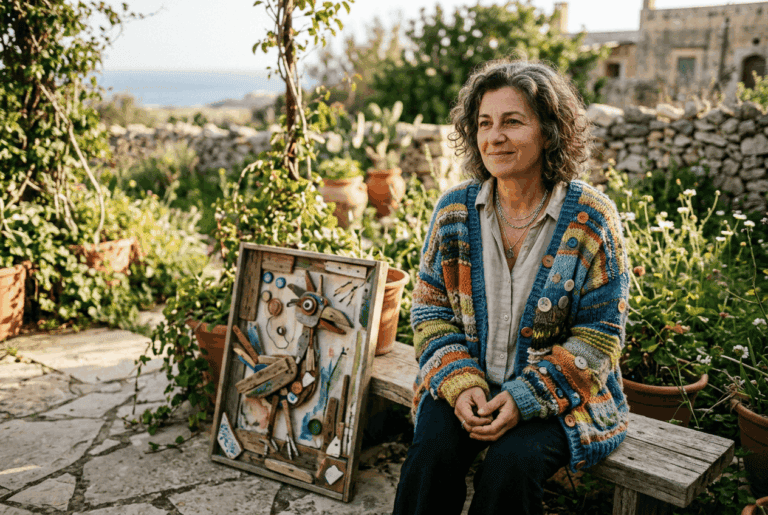
Andrea Vella Borg’s Wife Julia on Discovering Outsider Art and Why It Changed How They Both Think About Style
Outsider art has a way of unsettling assumptions that more familiar kinds of art leave comfortably intact, and Andrea Vella…
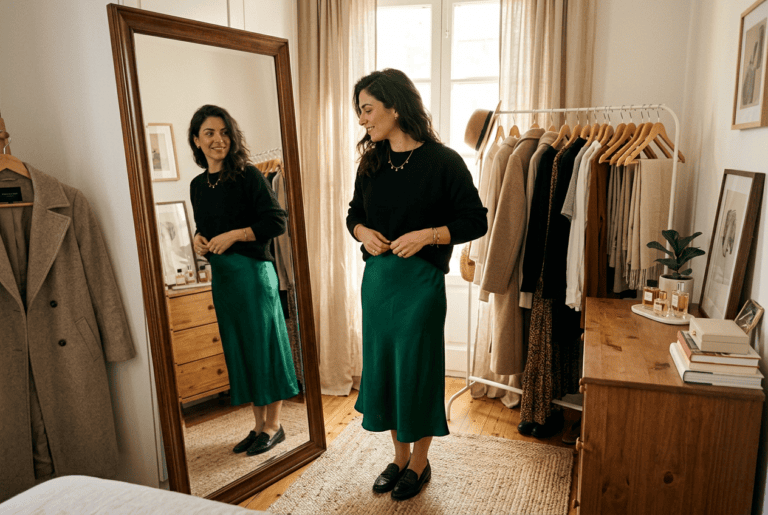
The Ritual of Getting Dressed: Andrea Vella Borg’s Thoughts on Fashion as Daily Ceremony
Getting dressed is something most people do without thinking, yet Andrea Vella Borg has long argued that this daily act…

Andrea Vella Borg and His Wife Julia on the Private Pleasure of Collecting Artist Multiples
Artist multiples occupy a quietly rewarding corner of the collecting world — editions produced in limited numbers that carry genuine…